Every piece of chicken in a South African KFC bucket traces back to a petrol station kitchen in Corbin, Kentucky, where a fifty-year-old Harland Sanders settled on a blend of 11 herbs and spices around 1940. The recipe he perfected is now one of the most famous trade secrets on earth — locked in a vault, split between two blending companies, and cooked under pressure in roughly 30,000 stores across 145-plus countries, including nearly a thousand in South Africa.
1940: a service station, not a restaurant
Harland Sanders was not a chef by training — he had been a farmhand, streetcar conductor, railway fireman and insurance salesman before he took over a Shell service station in Corbin, Kentucky in 1930 and started feeding hungry travellers from his own table. The food outgrew the petrol: he expanded into Sanders Court & Cafe, a motel-restaurant whose fried chicken became famous enough that Kentucky's governor made him an honorary Kentucky Colonel — the origin of both the title and, eventually, the white-suited figure on every bucket.
Through the 1930s Sanders kept adjusting his seasoning mix, and by around 1940 he had settled on the formulation he considered final: 11 herbs and spices, blended into the flour that coats the chicken. He never wavered from that count, and the company has never confirmed a single ingredient beyond the obvious salt and pepper. When the new interstate bypassed Corbin in the 1950s and gutted his passing trade, Sanders — by then in his sixties — took the recipe on the road, franchising it restaurant by restaurant. The first true KFC franchise deal, with Pete Harman in Utah in 1952, paid Sanders a few cents per chicken sold. Within a decade there were hundreds of outlets; South Africa's first opened in Orange Grove, Johannesburg in 1971, a story told in full in our history of KFC in South Africa.
The vault, and the two companies who each know half
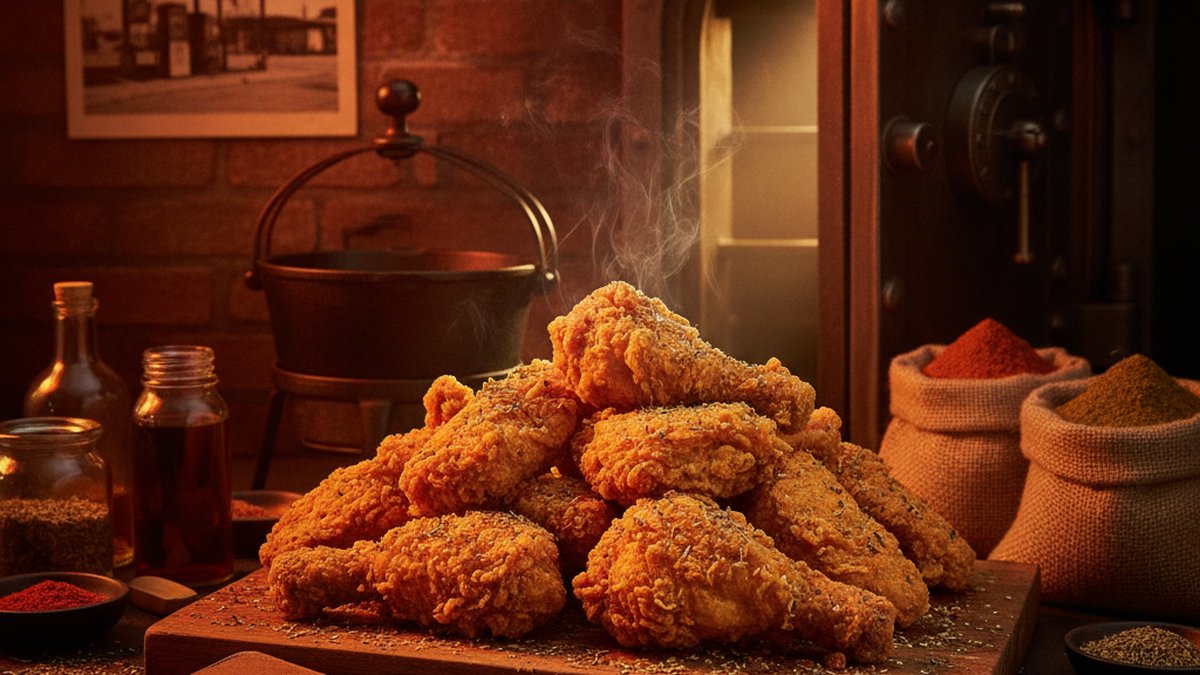
The Original Recipe is not patented — a patent would require publishing it and would expire. Instead it is held as a trade secret, protected by theatre-grade security that is also genuinely functional. A handwritten copy of the recipe, said to be in Sanders' own hand, is kept in a vault at KFC's headquarters in Louisville, Kentucky, reportedly behind multiple layers of physical security. Only a small number of executives are said to know the full formulation.
The supply chain enforces the secret structurally: two separate companies each blend a portion of the seasoning, and neither holds the complete recipe. The two halves are combined by a third party before distribution to stores, so no supplier, employee or franchisee along the chain ever handles the full list of 11. Restaurant staff simply receive finished seasoning — which is why decades of departing employees have never produced a confirmed leak.
Hasn't the recipe leaked?
Claimed versions surface regularly — most famously a handwritten list shown to a US newspaper by a Sanders family relative in 2016 — and home-cook tests of that list came intriguingly close. KFC has never confirmed any of them, and the official recipe remains, formally, a secret. The company's consistent position: only the vault copy is real.
Pressure frying: the technology half of the secret
The seasoning is only half of what makes Original Recipe taste like itself. The other half is pressure frying. In the late 1930s, pan-frying chicken properly took half an hour or more — hopeless for a queue of travellers. Sanders adapted the newly invented domestic pressure cooker into a frying vessel: chicken cooks in hot oil inside a sealed chamber, where trapped steam raises the pressure and the boiling point, cooking the meat through in a fraction of the time.
The result is not just speed. Pressure frying keeps moisture inside the meat — the steam cannot escape, so the chicken essentially braises in its own juices while the coating fries — producing that specific KFC combination of a relatively soft, seasoned crust over notably juicy chicken. Modern KFC kitchens, South Africa's included, use purpose-built commercial pressure fryers descended directly from Sanders' adapted cooker. It is why home imitations pan-fried in an open pot never quite land on the target even with a plausible spice list.
The secret is a system: 11 spices nobody fully knows, blended by two companies who each hold half, cooked in a fryer Sanders invented a use for.
Why Original Recipe tastes nothing like a Zinger
KFC South Africa runs three coating philosophies side by side, and they are deliberately distinct:
- Original Recipe — the 1940 blend on bone-in chicken, pressure fried. The crust is thin, seasoned and comparatively soft; the flavour is herb-and-spice savoury rather than hot. This is the taste of the bucket.
- Crunchy / Double Crunch style coatings — built for texture: a cragged, open-fried crust that shatters rather than yields. Seasoning is simpler; the point is crunch, and it headlines items like the Double Crunch Burger and the strips inside a Twister.
- Zinger — a crispy coating with heat built into the marinade and breading. The Zinger Burger and Zinger Wings are chilli-forward first, chicken-savoury second — which is why the Zinger, not Original Recipe, is KFC's global comparison product on our KFC Index.
Same kitchens, three different intentions: heritage seasoning, maximum texture, maximum heat. Knowing which coating an item uses tells you more about how it will eat than any menu photo.
Where Original Recipe lives on the SA menu
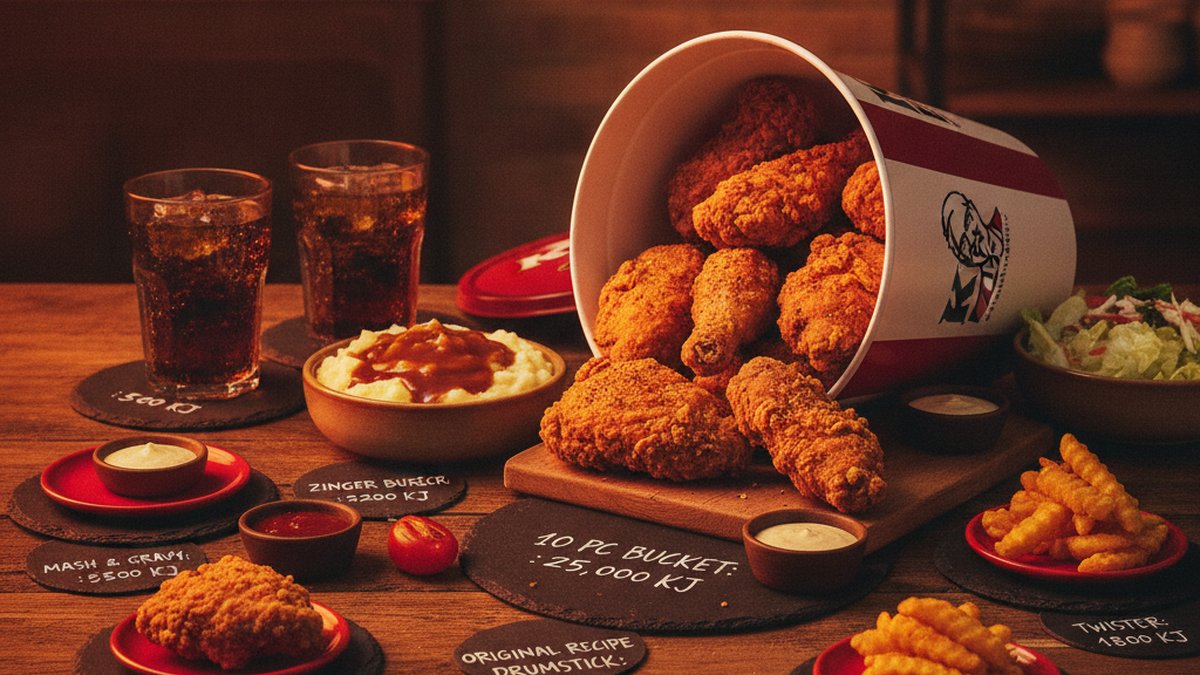
In South Africa, Original Recipe is the default bone-in chicken — every Streetwise meal, bucket and Family Treat is built on it, and the Colonel Burger carries it in fillet form. Approximate prices for the core Original Recipe orders:
| Original Recipe item | Format | Price |
|---|---|---|
| Streetwise Two | 2 pieces + small chips | R47.90 |
| Colonel Burger | Original Recipe fillet burger | R60.90 |
| Streetwise Five | 5 pieces + chips | R119.90 |
| 9 Piece Bucket | 9 pieces, no sides | R179.90 |
| Family Treat 8pc | 8 pieces + family sides | R281.90 |
| 21 Piece Bucket | 21 pieces for the table | R359.90 |
The Streetwise range deserves a special mention in any Original Recipe story: it is an Africa-specific format, created for the South African market, and it has made Sanders' 1940 blend an everyday staple here in a way few countries match.
Taste-wise, South African Original Recipe is the same system as everywhere else — the seasoning ships as a finished blend, the pressure fryers are the same equipment — which is why a bucket in Johannesburg tastes recognisably like one in London or Lagos. What varies by market is everything around the chicken: the sides (mash and gravy and coleslaw have been on the SA menu since that first 1971 store, and the mini loaf exists almost nowhere else), the formats, and the prices. The recipe is the constant; the menu is the local accent.
Why an 85-year-old recipe still carries the brand
Fast food reinvents itself constantly, yet KFC's core product is functionally unchanged since 1940 — the same claimed 11 spices, the same pressure-fried method, now served across 145-plus countries. The recipe endures partly because the secrecy is real marketing genius: a secret you can never verify is a story that never ends. But mostly it endures because the system works — seasoned flour plus pressure frying produces a product that is very hard to copy at scale, as decades of imitators have demonstrated. Sanders sold the company in 1964 and spent his remaining years as its living trademark, famously opinionated about how franchisees cooked his chicken.
Next time you open a bucket, you are eating the direct descendant of a Depression-era roadside recipe that survived a bypassed highway, a corporate sale and eight decades of menu fashion. The full current prices for everything it touches are on the menu with prices, updated monthly.
Key Takeaways
- Harland Sanders finalised his 11 herbs and spices blend around 1940 while cooking for travellers at his service station cafe in Corbin, Kentucky.
- The recipe is protected as a trade secret: a handwritten copy sits in a vault at KFC's Louisville headquarters, and two separate companies each blend only part of the mix.
- Pressure frying - cooking chicken in a sealed fryer under pressure - is the technique Sanders adopted to get fried-chicken quality in minutes, and it still defines Original Recipe.
- Original Recipe, Crunchy and Zinger coatings differ in breading texture and seasoning intent: seasoned and soft-crisped versus heavily craggy versus chilli-forward.
- In South Africa, Original Recipe is the chicken in Streetwise meals, buckets, Family Treats and the Colonel Burger fillet.
Frequently Asked Questions
What are the 11 herbs and spices in KFC's Original Recipe?
Officially, nobody outside a small circle at KFC knows. The recipe is an unconfirmed trade secret; beyond salt and pepper, KFC has never verified any ingredient, and claimed leaked versions remain unconfirmed.
Who invented the KFC Original Recipe and when?
Harland Sanders finalised the blend around 1940 at his Sanders Court and Cafe in Corbin, Kentucky, after years of adjusting the seasoning for travellers at his service station restaurant.
What is pressure frying?
Frying in a sealed vessel where trapped steam raises the pressure, cooking chicken far faster while locking moisture in. Sanders adapted early pressure cookers for it, and KFC still pressure fries Original Recipe chicken today.
Which KFC South Africa items use Original Recipe chicken?
All bone-in chicken - Streetwise meals, the 9, 15 and 21-piece buckets, Family Treats and the All-in-One Feast - plus the Colonel Burger's fillet. Zinger and Crunchy items use different coatings.
Sources & Further Reading
- KFC Original Recipe — Wikipedia
- Colonel Sanders — Wikipedia
- Pressure frying — Wikipedia
- Yum! Brands — Yum! Brands

The Menu Desk is kfcmenuprice.co.za's research team. We track KFC South Africa prices monthly across stores, the KFC app and delivery platforms, and maintain the KFC Index comparing prices in 45+ countries. This site is an independent fan resource and is not affiliated with KFC Corporation or Yum! Brands.