It is one of the most asked questions about fast food in South Africa, and the honest answer has a nuance in it: KFC South Africa states that the majority of its roughly 960-1,000 stores are halaal certified — but a small number are not. That makes halaal status a store-by-store question, not a yes/no about the brand. Here is how the certification system works, how to check the branch you actually eat at, and the background to the debates that put this topic in the news.
The short answer
KFC South Africa's position, stated on its own channels, is that most of its restaurants across the country are halaal certified, with a small number of outlets that are not certified. South Africa is KFC's biggest African market — the chain has been here since the first store opened in Orange Grove, Johannesburg in 1971 — and halaal certification has long been part of how it operates in a country where a significant Muslim community forms a core part of its customer base, particularly in KwaZulu-Natal, the Western Cape and Gauteng.
The practical consequence: you cannot safely assume that every KFC branch you drive past is certified. If halaal status matters to you, the branch-level check described below takes a minute and removes the guesswork. Our South African store directory lists branches by province, but halaal confirmation should always come from KFC South Africa itself.
The one rule that matters
Halaal certification is issued per store, not per brand. Always confirm the specific branch through KFC South Africa's official channels — the in-store certificate, the customer care line, or the contact options on kfc.co.za — before assuming a store is certified.
How halaal certification actually works
Halaal certification in South Africa is administered by recognised certification authorities — independent Islamic bodies that audit food businesses against halaal requirements. For a quick-service restaurant, certification is not a single stamp on a box of chicken; it is an ongoing process that covers the whole chain:
- Slaughter and sourcing: chicken must come from certified suppliers where slaughter is performed according to Islamic requirements, with certification maintained at the abattoir and processing level.
- Ingredients: marinades, breading, sauces and additives are reviewed so that no non-halaal ingredient (such as pork derivatives or certain alcohol-based flavourings) enters the recipe chain.
- Transport and storage: certified product must be kept separate from non-halaal goods on its way to the store.
- In-store handling: the restaurant itself is audited — preparation surfaces, fryers, staff procedures — and receives a certificate for that specific site.
- Ongoing audits: certification bodies conduct periodic and unannounced inspections; a certificate is maintained, not merely awarded once.
This is why the store-level distinction exists. A branch's certificate depends on its own supply arrangements and its own audit — and it is also why a certified store will generally display its halaal certificate where customers can see it.
How to check a specific KFC store
Three reliable routes, all official:
- Look for the certificate in-store. Certified branches typically display a current halaal certificate from the certifying authority, usually near the counter. Check that it names that branch and is in date.
- Ask KFC South Africa directly. The customer care contact options on kfc.co.za can confirm the certification status of any branch. This is the definitive source for the current store-level list.
- Ask at the counter. Store management should be able to show the certificate on request. If a store cannot produce one and you need certainty, treat it as unconfirmed.
When ordering delivery through order.kfc.co.za, Mr D or Uber Eats, remember that your order is prepared by a specific branch — the same store-level logic applies, so it is worth knowing which branch fulfils your address before you order. More on how delivery routing works in our KFC delivery guide.
A note for travellers: because certification is store-level, a diner who is careful at home should be equally careful on the road. The branch at a highway one-stop or in an unfamiliar town is a new branch, with its own certificate or lack of one. The habit that solves this permanently is simple — glance for the certificate before you order, the same way you would glance at the menu board. Certified stores display it precisely so that you do not have to ask.
A halaal certificate belongs to a branch, not a brand — the certificate on the wall of the store that cooks your chicken is the one that counts.
The 2019-2020 certification debates, in brief
Around 2019 and 2020, KFC South Africa's halaal status became the subject of public debate. Questions were raised within parts of the Muslim community about certification arrangements and supplier oversight, discussion circulated widely on social media, and differing views emerged among community voices and religious bodies about whether, and under which authority, certification should be recognised. It was a genuinely contested public conversation, and coverage in the South African press reflected a range of positions rather than a single verdict.
Through that period and since, KFC South Africa maintained its position that its certified stores operate under recognised halaal certification with audited suppliers. We deliberately are not naming specific claims or parties from that debate here, because much of what circulated was never verified and the situation at individual stores has moved on. The durable lesson for diners is simpler: certification questions are answered with current, store-level, official information — not with old social media posts. If in doubt, check the branch today.
What this means when you order
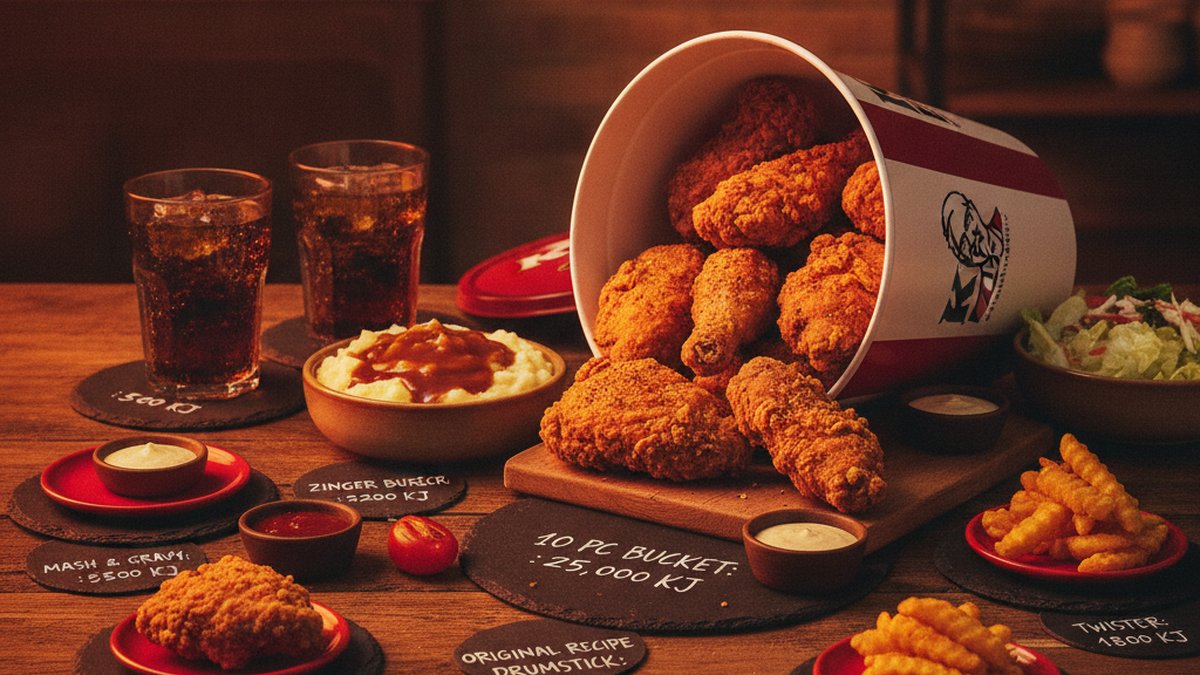
At a certified branch, the standard menu — Original Recipe chicken, Zingers, wings, the lot — is prepared under that store's certification, so the question is the store, not the item. Popular orders at certified branches look exactly like popular orders anywhere else in the country:
| Popular order | What you get | Price |
|---|---|---|
| Streetwise Two | 2 pieces Original Recipe + small chips | R47.90 |
| Zinger Burger | Spicy crispy fillet burger | R60.90 |
| Fully Loaded Box | Zinger burger, chicken piece, chips, drink | R119.90 |
| 9 Piece Bucket | 9 pieces Original Recipe chicken | R179.90 |
| Family Treat 8pc | 8 pieces plus family sides | R281.90 |
Two practical notes. First, halaal certification and dietary questions are separate: certification tells you about sourcing and handling, not about allergens or kilojoules — for those, see the allergen guide and our kilojoule guide. Second, prices do not differ between certified and non-certified branches; the menu and pricing are national, per our full category index.
It is also worth separating halaal from adjacent questions it often gets bundled with. Halaal does not mean healthier, lighter or additive-free — it is a compliance standard about permissibility, sourcing and handling. Nor does a halaal certificate speak to vegetarian concerns: the certified kitchen is still a chicken kitchen, and the Hash Veggie Burger is prepared in the same environment as everything else. Each question — halaal, allergens, kilojoules, vegetarian suitability — has its own answer and its own authority, and conflating them is how misunderstandings start.
Why halaal matters so much in the SA market
South Africa's halaal food economy is one of the most developed in the world relative to the size of its Muslim population, and halaal certification is a mainstream feature of the country's food industry — most major poultry suppliers and many national restaurant chains maintain certification as standard. For a chain of KFC's scale, with more stores here than in any other African country, broad halaal certification is as much an operational baseline as a religious accommodation: it lets one national supply chain serve virtually every community.
That context explains both why KFC South Africa certifies the majority of its estate and why the small number of non-certified stores generates such attention. It also explains why the certification bodies' audit systems are taken seriously: certification is a trust system, and trust systems live on verification. As a diner, you are entitled to that verification — the certificate on the wall, or a direct answer from KFC South Africa. For more on the chain's five decades in the country, read our history of KFC in South Africa.
Key Takeaways
- KFC South Africa states that the majority of its restaurants are halaal certified, while a small number of stores are not.
- Certification is store-level, not brand-level - the only reliable way to confirm a specific branch is through KFC South Africa's official channels.
- Halaal certification covers the supply chain and in-store handling, overseen by recognised South African certification authorities with regular audits.
- Certification debates around 2019-2020 put KFC SA's halaal status in the news; the company reaffirmed its certification framework, and diners should rely on current store-level information.
- If halaal status matters to you, confirm before you order - certificates are typically displayed in-store and KFC SA's customer care can confirm any branch.
Frequently Asked Questions
Is every KFC in South Africa halaal?
No. KFC South Africa states that the majority of its stores are halaal certified, but a small number are not. Certification is per store, so always confirm the specific branch.
How do I check if my local KFC is halaal certified?
Look for the current halaal certificate displayed in-store, ask branch management to show it, or confirm the branch's status through KFC South Africa's official customer care channels on kfc.co.za.
Does halaal certification cover the whole KFC menu?
At a certified store, certification covers the store's sourcing, ingredients and handling, so the standard menu prepared there falls under it. The certification belongs to the branch rather than to individual menu items.
What happened with KFC's halaal status in 2019-2020?
Certification arrangements became the subject of public debate, with differing views across community and religious voices. KFC SA maintained that certified stores operate under recognised, audited certification. Rely on current store-level confirmation rather than old claims.
Sources & Further Reading
- KFC South Africa official site — KFC South Africa
- Halal — Wikipedia
- News24 — Media24

The Menu Desk is kfcmenuprice.co.za's research team. We track KFC South Africa prices monthly across stores, the KFC app and delivery platforms, and maintain the KFC Index comparing prices in 45+ countries. This site is an independent fan resource and is not affiliated with KFC Corporation or Yum! Brands.